
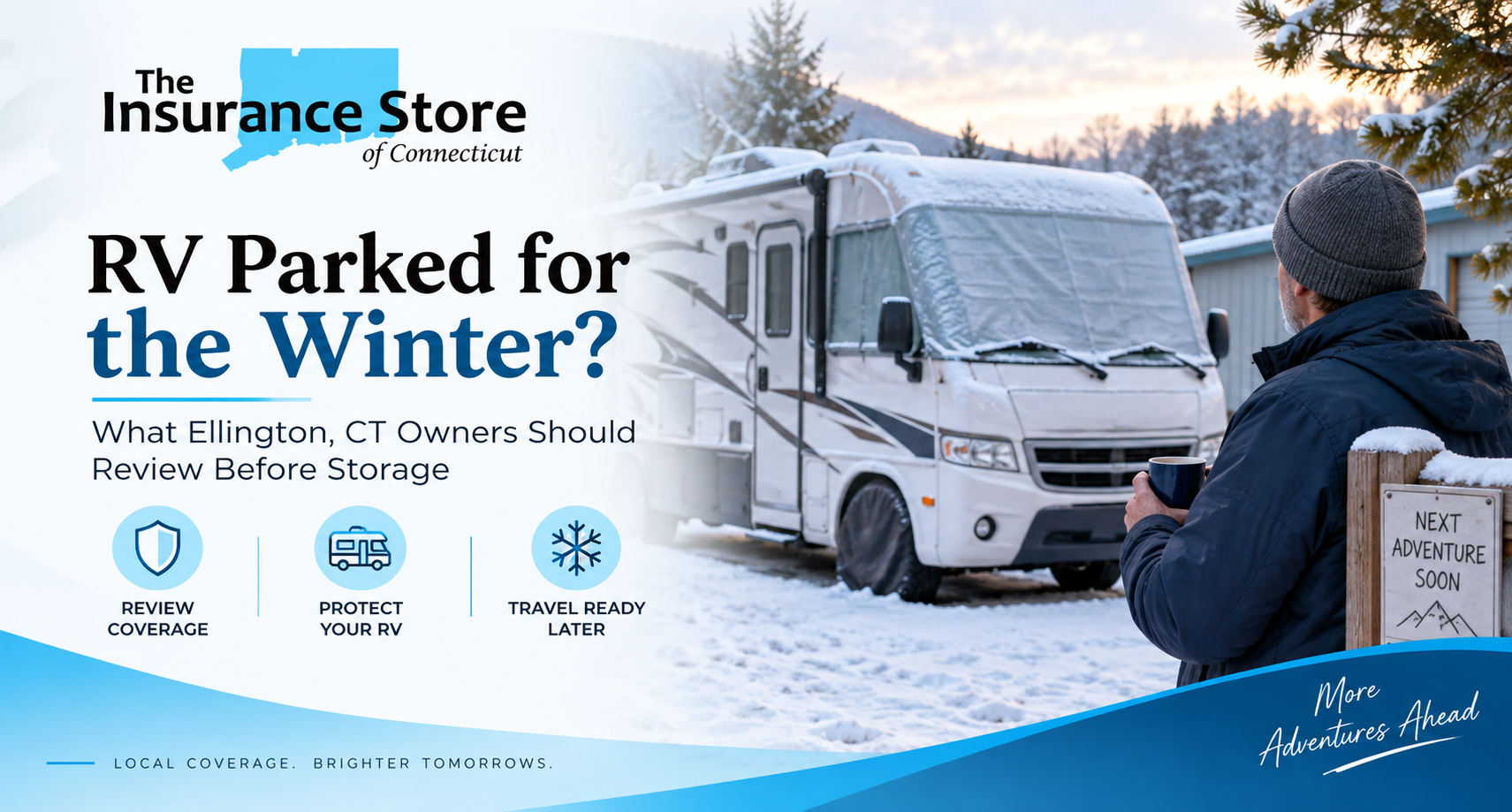
When colder weather arrives in Connecticut, many RV owners park their motorhomes, travel trailers, or fifth wheels until the next travel season. Winterizing the plumbing, checking the battery, covering the RV, and choosing a safe storage location may already be on the checklist. But there is another important step that can easily be overlooked: reviewing your insurance.
An RV that is parked for several months may not face the same road risks as one being driven, but being in storage does not mean it is completely protected from loss. Weather, theft, vandalism, fire, falling objects, and other events can still occur. Before storing an RV for winter, Ellington owners should understand what their individual policy does and does not cover.
Why Review Insurance When the RV Isn’t Being Driven?
Some owners may wonder why they need to think about insurance when their RV will remain parked all winter.
The important distinction is between driving-related risks and risks that can exist while the vehicle is stationary. Depending on the policy, different types of protection may apply to collision, theft, weather damage, liability, personal belongings, or other losses.
Rather than assuming coverage automatically remains appropriate, RV owners can contact their insurer or an agency such as The Insurance Store to review their individual policy before changing how the RV is used or stored.
Tell Your Insurer Where the RV Will Be Stored
Where you store an RV can matter.
Some owners keep their RV at home, while others use a commercial storage facility, seasonal campground, indoor building, or another property. The circumstances and risks may differ depending on the location.
Before storage begins, confirm whether your insurer needs updated information about where the RV will be kept. If you use a commercial storage facility, read its agreement carefully as well. Do not assume the facility’s insurance automatically covers damage to your RV or belongings.
Don’t Automatically Cancel Coverage for Winter
Canceling insurance because an RV will not be driven may sound like an easy way to reduce expenses, but it can create unintended gaps.
Even while parked, an RV could potentially be exposed to non-driving losses. The exact protection available depends on your insurer, policy type, deductibles, exclusions, and other terms.
Owners researching Best Recreational Vehicle Insurance in Ellington CT should ask specifically how seasonal storage affects their existing coverage and whether any policy adjustments are available. Make changes only after understanding what protection would remain and what would be removed.
Review Personal Belongings Left Inside
RVs often contain much more than the vehicle itself. Camping equipment, televisions, kitchen supplies, tools, outdoor furniture, electronics, clothing, and other personal belongings may stay inside throughout winter.
Coverage for these items can vary considerably. Some property may be covered under an RV policy, some might potentially involve another applicable policy, and limits or exclusions may apply.
Create an inventory before storage. Photographs, receipts, serial numbers, and a simple list of valuable items can make it easier to remember what was stored inside. If possible, consider removing particularly valuable or temperature-sensitive belongings.
Have You Added Equipment or Upgrades?
Think about what has changed since the RV policy was originally purchased.
Perhaps you added solar equipment, an upgraded entertainment system, an awning, satellite equipment, custom storage, or other accessories. Do not assume every modification is automatically reflected in the current policy.
Contact your insurance professional and ask whether significant upgrades should be documented or whether they affect the coverage you currently carry.
Understand Weather-Related Risks
Connecticut winters can bring freezing temperatures, wind, snow, ice, and falling branches. Owners should understand how their policy responds to different types of weather-related damage rather than assuming every event is covered.
Water damage also deserves careful attention because insurance treatment can depend on how the water entered and what caused the damage. For example, flood coverage is generally separate from a standard homeowners policy. FEMA states that most homeowners insurance does not cover flood damage.
Homeowners comparing Best flood insurance services in Glastonbury CT should therefore review flood protection separately instead of assuming all water-related losses fall under one policy.
Document the RV Before Storage
Before leaving the RV for several months, take clear photographs of its exterior and interior.
Photograph the roof, windows, doors, body panels, tires, appliances, major equipment, and valuable contents. Keep these records somewhere other than inside the RV.
Documentation does not guarantee that a future claim will be covered, but it provides a useful record of the RV’s condition before storage.
Ask About Security Requirements
If the RV will be stored away from home, ask the facility about security measures such as gates, lighting, cameras, access controls, and procedures for reporting damage.
Your insurer may also have requirements or recommendations related to storage. Instead of relying on general advice, check your own policy and ask what conditions could affect coverage.
Review Everything Again Before Spring
Your insurance review should not end when the RV enters storage.
Before taking it back on the road, check that the registration and required insurance are current, confirm that any seasonal policy changes have been reversed when necessary, and review coverage before the first trip.
This is also a good time to update information about new drivers, equipment, usage, or travel plans.
Final Thoughts
Winter storage protects an RV from unnecessary road use, but it does not eliminate every possible risk. For Ellington owners, the insurance side of winter preparation should include reviewing the storage location, current coverage, personal belongings, upgrades, weather-related risks, and any seasonal policy changes.
Most importantly, do not cancel or reduce coverage based only on assumptions about what happens while an RV is parked. Insurance policies differ by carrier and customer. Reviewing the actual policy and discussing planned storage with a licensed insurance professional can help you understand exactly what protection will remain throughout the winter.