
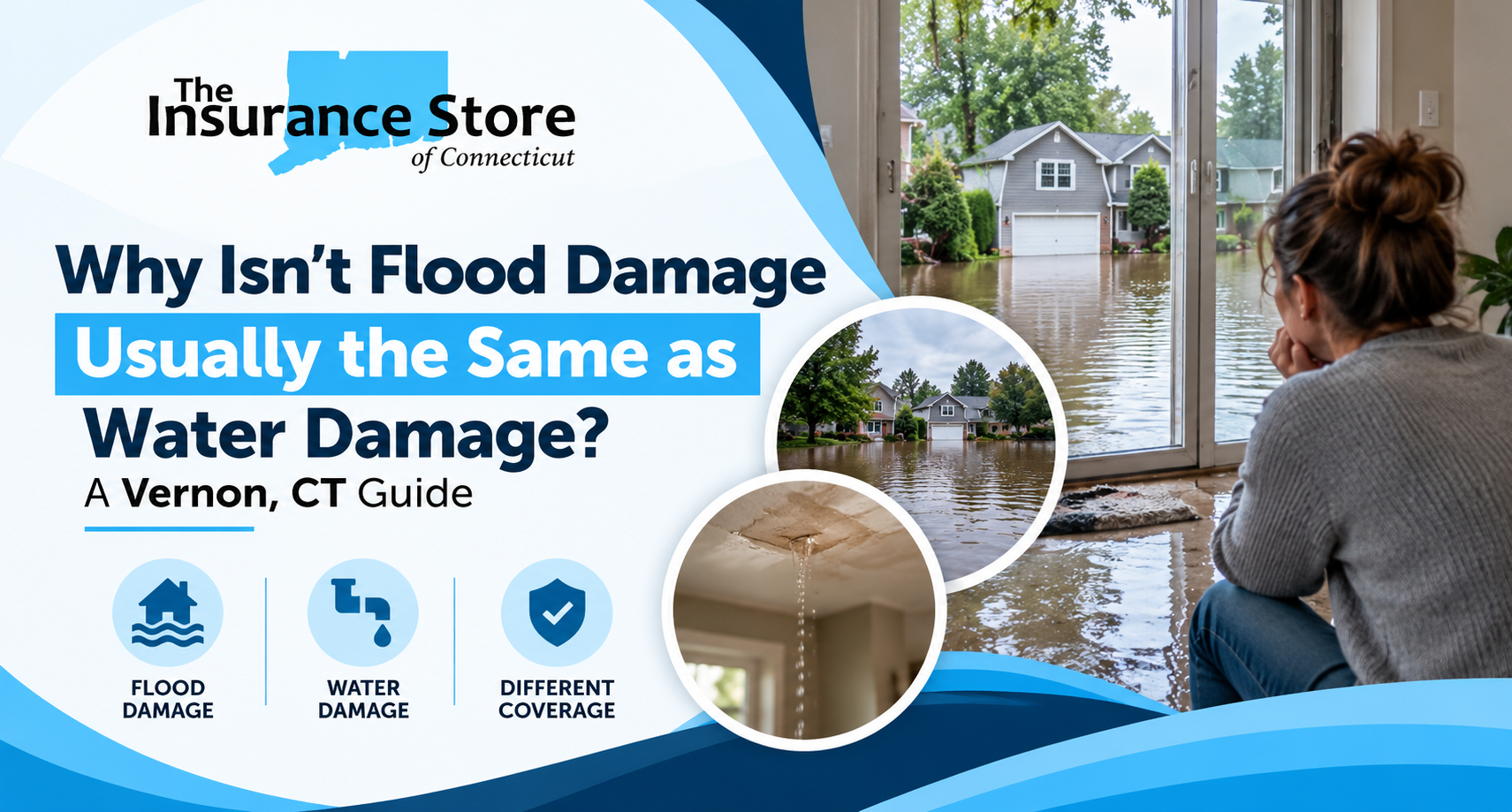
When water enters your home, it may seem like the source should not matter. A basement fills after heavy rain, a pipe breaks, or water rises from outside, and the result can look similar: wet floors, damaged belongings, and concerns about repairs.
From an insurance perspective, however, flood damage and other types of water damage are not necessarily treated the same way. The source and circumstances of the water can determine which type of insurance coverage may apply. Understanding this difference can help Vernon, CT homeowners review their policies before a problem occurs.
What Is Considered Flood Damage?
Flood insurance uses a specific definition of flooding. Under the National Flood Insurance Program (NFIP), a flood generally involves a general and temporary inundation of normally dry land affecting at least two acres or two properties, with certain causes such as overflow of inland or tidal waters, unusual and rapid surface-water runoff, or mudflow.
That definition is more specific than simply saying, “There is water in my basement.”
For example, water entering a property because of widespread surface-water accumulation after a major rain event may fall under a flood-related situation, depending on the circumstances and policy terms.
What Is Water Damage?
Water damage is a broader everyday description. It can result from many different sources inside or around a home.
A burst pipe, leaking water heater, overflowing appliance, plumbing problem, or certain roof leaks may create water damage without meeting the insurance definition of a flood.
This distinction matters because standard homeowners insurance and flood insurance are separate forms of coverage. The Insurance Store of CT explains that standard homeowners/property insurance generally does not cover flooding and that flood insurance is available separately for homeowners, renters, and businesses.
Why Does the Source of the Water Matter?
Imagine two Vernon homes experiencing water in their basements on the same day.
In one home, a plumbing line breaks and releases water inside the property. In another, water from outside accumulates and enters the home during a broader flooding event.
The visible damage could look similar, but the cause is different. Insurance policies are written with specific definitions, exclusions, conditions, and limits, so the source of the water can affect how a claim is evaluated.
This is why homeowners should not assume that every type of water intrusion is covered in exactly the same way.
Heavy Rain Does Not Automatically Mean Flood Coverage
Heavy rain can create several different types of property damage.
Rain may contribute to roof damage, plumbing-related problems, drainage issues, surface-water accumulation, or flooding. The fact that rain is involved does not by itself determine the applicable coverage.
The Insurance Store of CT notes that flood risk can be influenced by rainfall, topography, drainage systems, development, and other factors.
For homeowners, the useful lesson is simple: focus on where the water came from and what caused the damage, rather than assuming that all rain-related water damage falls into one category.
Flood Insurance Is Separate Coverage
One of the most important points for homeowners to understand is that flood insurance is generally separate from a standard homeowners policy.
The NFIP provides federally backed flood insurance, while private flood insurance may also be available depending on the insurer and property. Coverage, limits, exclusions, deductibles, and eligibility can vary.
A homeowner should review the actual policy rather than relying on a general assumption about what “home insurance” includes.
For homeowners comparing Best flood insurance services in Glastonbury CT, understanding the difference between flood coverage and ordinary water-damage coverage is an important starting point.
What About a Sewer Backup?
Sewer or drain backups can create another area of confusion.
Water backing up through a drain is not automatically the same thing as flooding. Coverage may depend on the cause of the backup and the specific policy provisions.
Flood insurance policies also have their own rules regarding sewer backups. FEMA’s current claims guidance explains that certain sewer or drain backups may be covered under an NFIP policy when a flood is the proximate cause.
Because these situations can be complicated, homeowners should check their policy language and discuss questions with their insurance professional.
Why Location Still Matters
Living outside a mapped high-risk flood area does not necessarily mean a property can never experience flooding.
Flood risk can change because of heavy rainfall, drainage conditions, development, changes to the surrounding landscape, and other factors. FEMA also maintains flood maps that are used to identify areas with different levels of flood hazard.
For Vernon homeowners, looking at the property’s actual circumstances can therefore be more useful than assuming that flood insurance is only relevant to properties immediately next to a river or other body of water.
Don’t Forget Your Other Insurance Needs
Homeowners often have several different types of property and personal insurance. The right combination depends on the household, property, vehicles, recreational equipment, and other circumstances.
For example, someone who owns an RV may need separate recreational vehicle coverage rather than assuming their homeowners or auto policy provides everything they need. The Insurance Store provides Best Recreational Vehicle Insurance in Ellington CT as one example of specialized coverage.
The important point is to understand what each policy is designed to cover.
What Should Vernon Homeowners Do Before a Water Problem?
The best time to review insurance coverage is before water enters the home.
Look at your homeowners policy, check whether you have flood insurance, understand your deductibles and limits, and ask questions about situations that are unclear. You may also want to document your belongings with photographs and keep important policy information accessible.
If you are unsure whether a particular type of water damage would be covered, ask your insurance professional rather than waiting until after a loss.
Final Thoughts
Flood damage and other water damage can look very similar after an incident, but they are not necessarily treated the same way by insurance policies. The source of the water, the circumstances surrounding the loss, and the specific policy language all matter.
For Vernon, CT homeowners, understanding this distinction can make insurance planning easier. Flood coverage is generally separate from standard homeowners insurance, and assumptions about coverage can create problems when a loss occurs.
Taking time to review your policies before severe weather or a water-related emergency gives you an opportunity to understand your coverage, ask questions, and identify potential gaps while there is still time to address them.
For guidance on different insurance needs, homeowners can also explore The Insurance Store and discuss their individual circumstances with an insurance professional.